By playing, you allow YouTube (Google) to process data and use cookies. Privacy.
The rules of swarming
Testing how individual decisions give rise to collective motion in locusts.
This study revealed that locust swarming behavior emerges from internal decision-making processes rather than alignment with nearby individuals.
 Expand figure
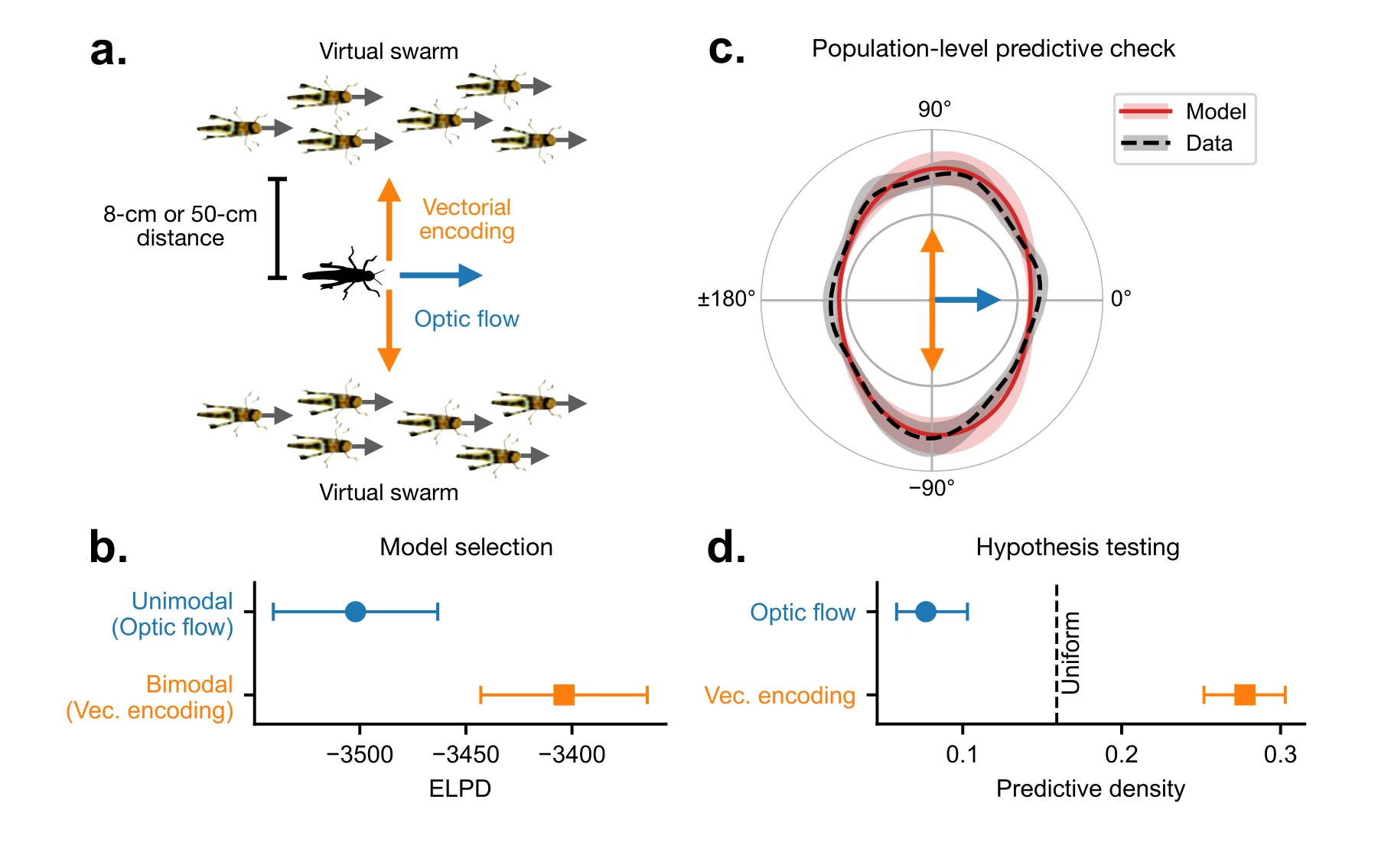
Testing how locusts encode their neighbors
The virtual swarms distinguish two predictions: following visual motion, or choosing directions toward neighbors. The circular model compares these hypotheses against the locusts’ observed headings.
Graving et al., Unwrapping circular statistics with Bayesian multilevel models. Figures from the circular-statistics manuscript, using the same data as the Science study.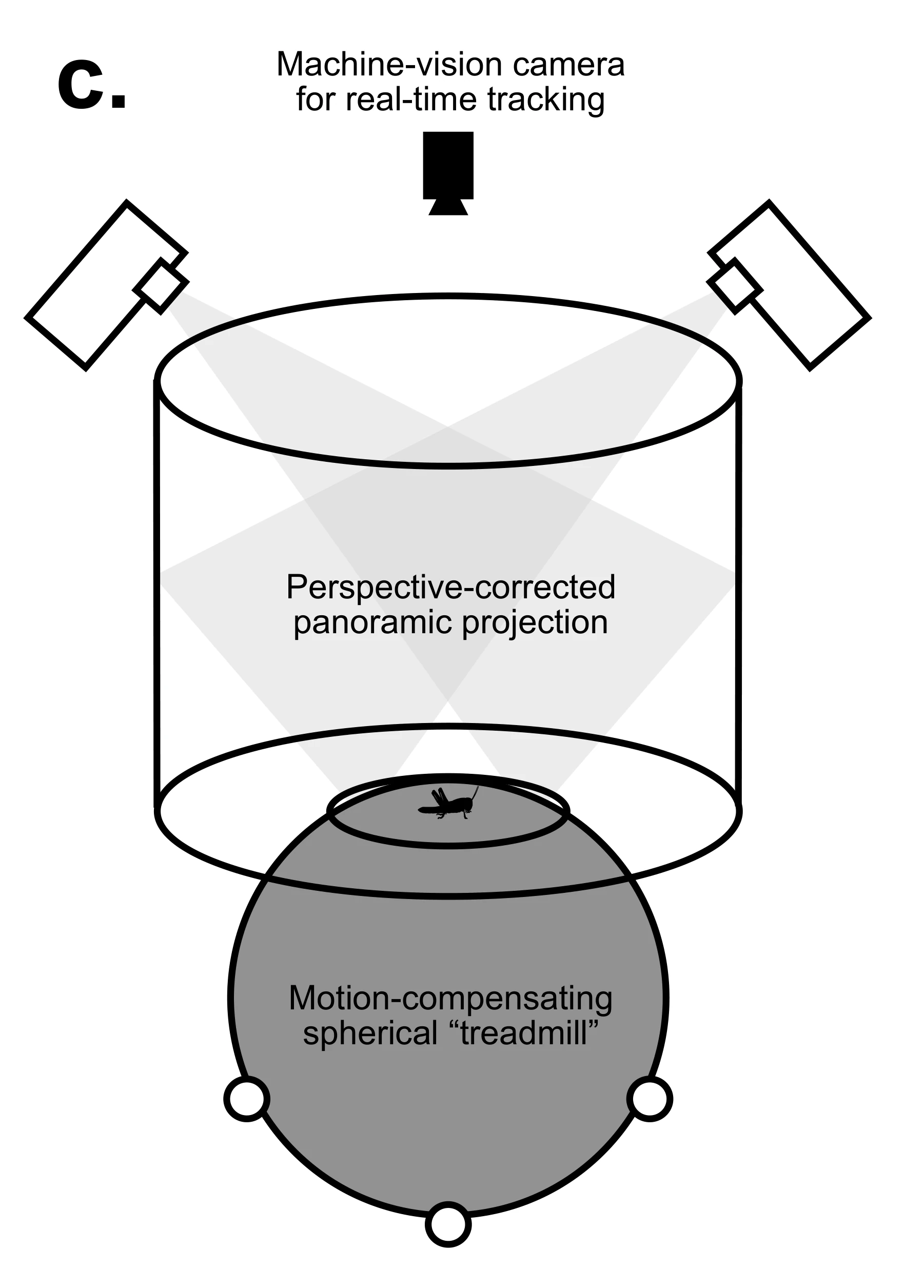
My contribution
I collaborated with colleagues to analyze behavioral data from controlled lab and immersive virtual reality experiments, developing a Bayesian model to test competing mechanistic hypotheses of collective motion. Our results challenged classical alignment-based theories, showing that group coordination emerges from individual decision-making informed by neural representations of neighboring locusts.