Optimal decision making
Exploring how movement, beliefs, and spatial geometry shape animal decisions.
In collaboration with Iain Couzin · MPI-AB / University of Konstanz.
I’m a researcher and engineer working at the intersection of natural and artificial intelligence, data science, and animal behavior.
My research explores how natural and artificial systems learn, make decisions, and adapt under uncertainty. Drawing on Bayesian statistics, causal inference, machine learning, and reinforcement learning, I develop theory and models to generate and test hypotheses about the mechanisms underlying behavior.
My previous work spans animal navigation, collective motion, and computer vision tools to measure behavior in the lab and in the wild. I’ve worked with neuroscientists, biologists, physicists, and engineers to develop questions, experiments, and models together. This research has been featured in Quanta Magazine, Nature Methods, Nature, Science, Physics World, National Geographic, and Discover.
I completed my PhD with Iain Couzin at the Max Planck Institute of Animal Behavior and the University of Konstanz, and my MSc with Dan Wiegmann and Vern Bingman at Bowling Green State University.
 © M.L. Smith
Exploring how movement, beliefs, and spatial geometry shape animal decisions.
In collaboration with Iain Couzin · MPI-AB / University of Konstanz.
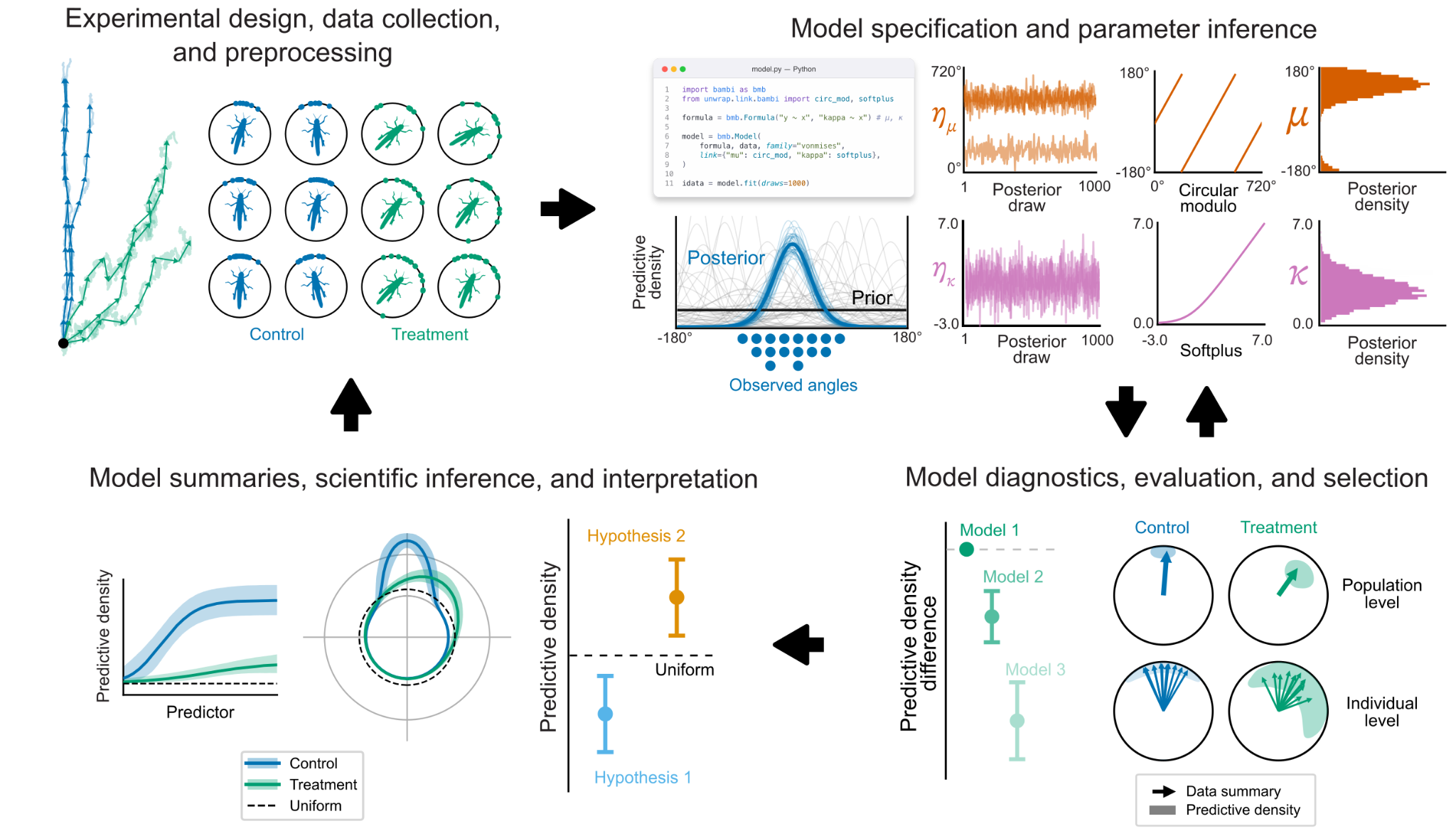
Developing Bayesian circular statistics to model directional data and quantify uncertainty in animal behavior.
In collaboration with James Foster · University of Konstanz.
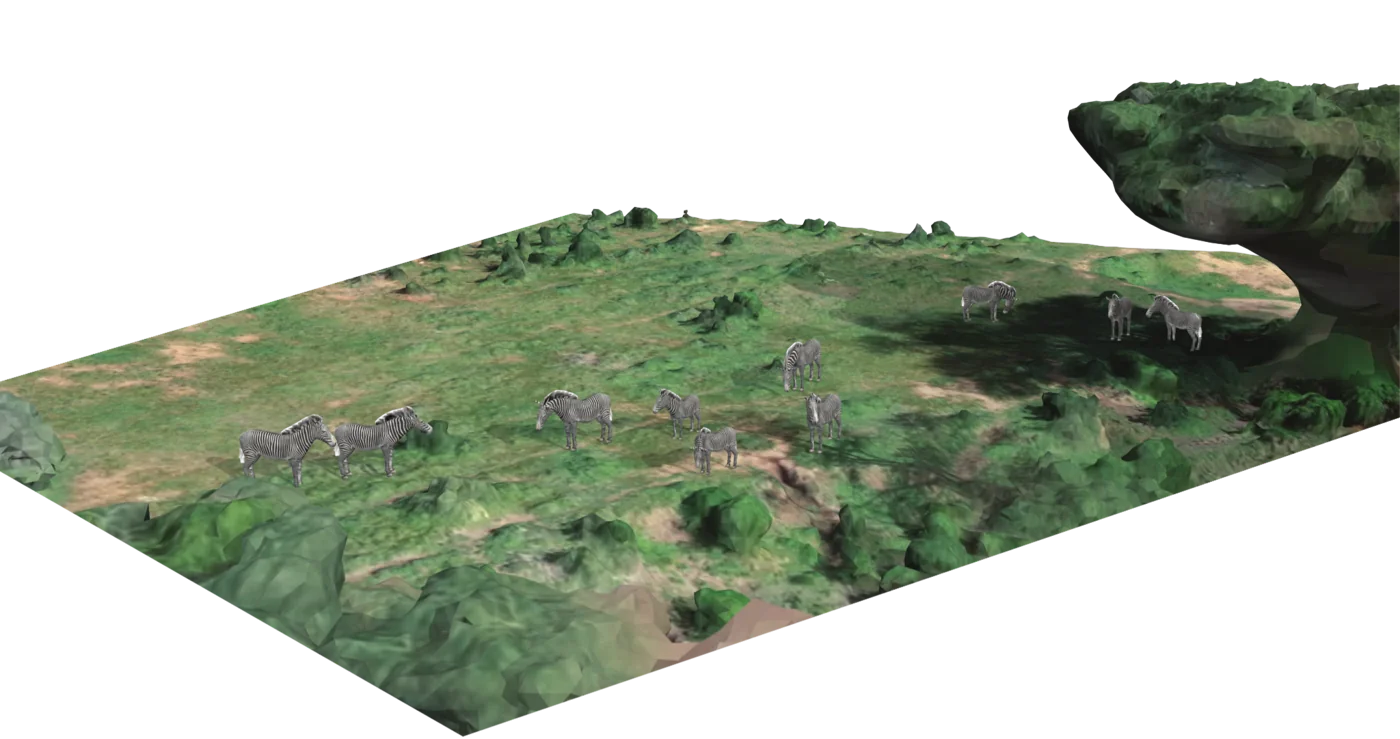
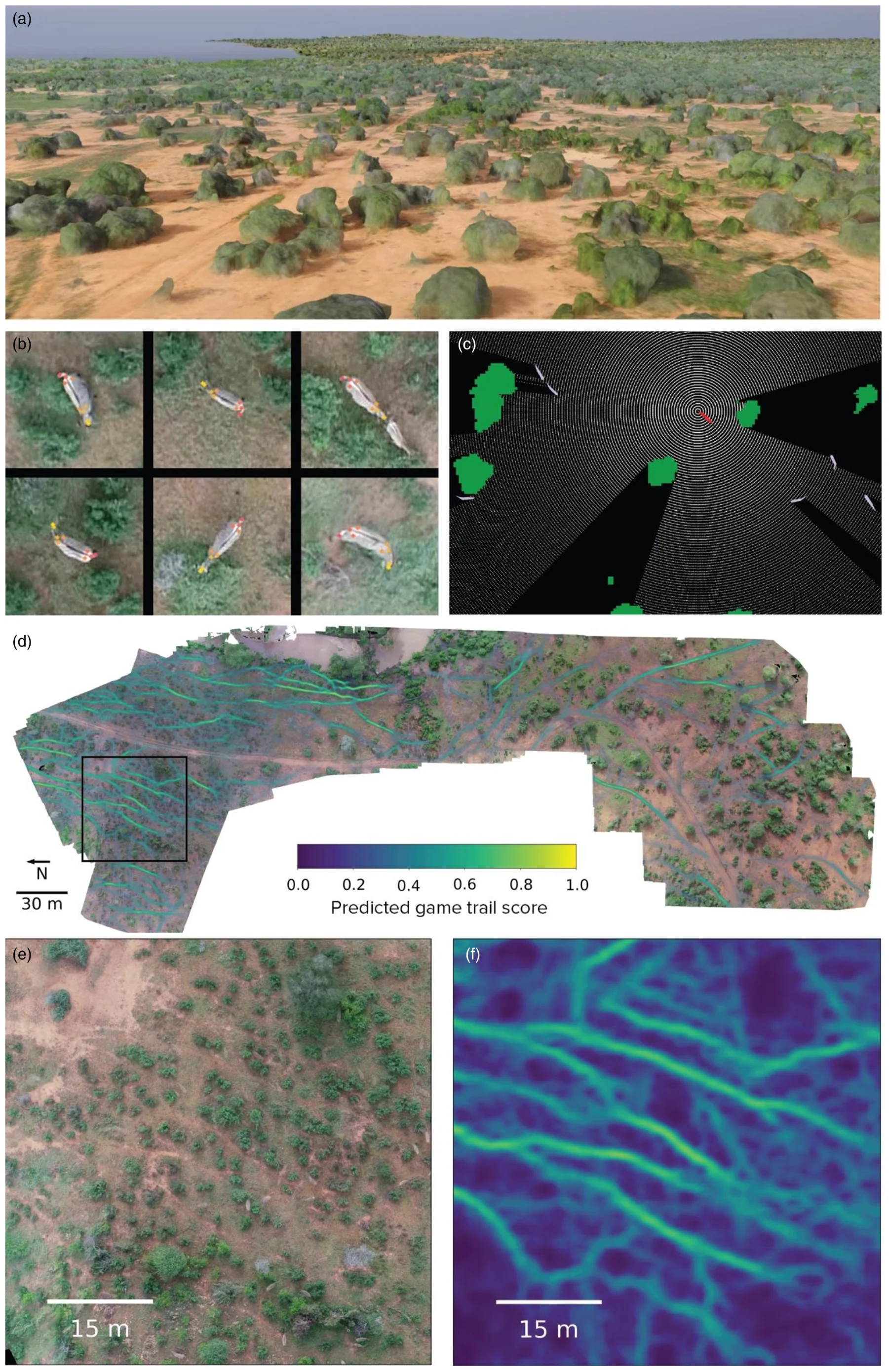
Studying how zebras combine terrain, social context, and internal state when choosing where to move.
In collaboration with Blair Costelloe · Mara Elephant Project.
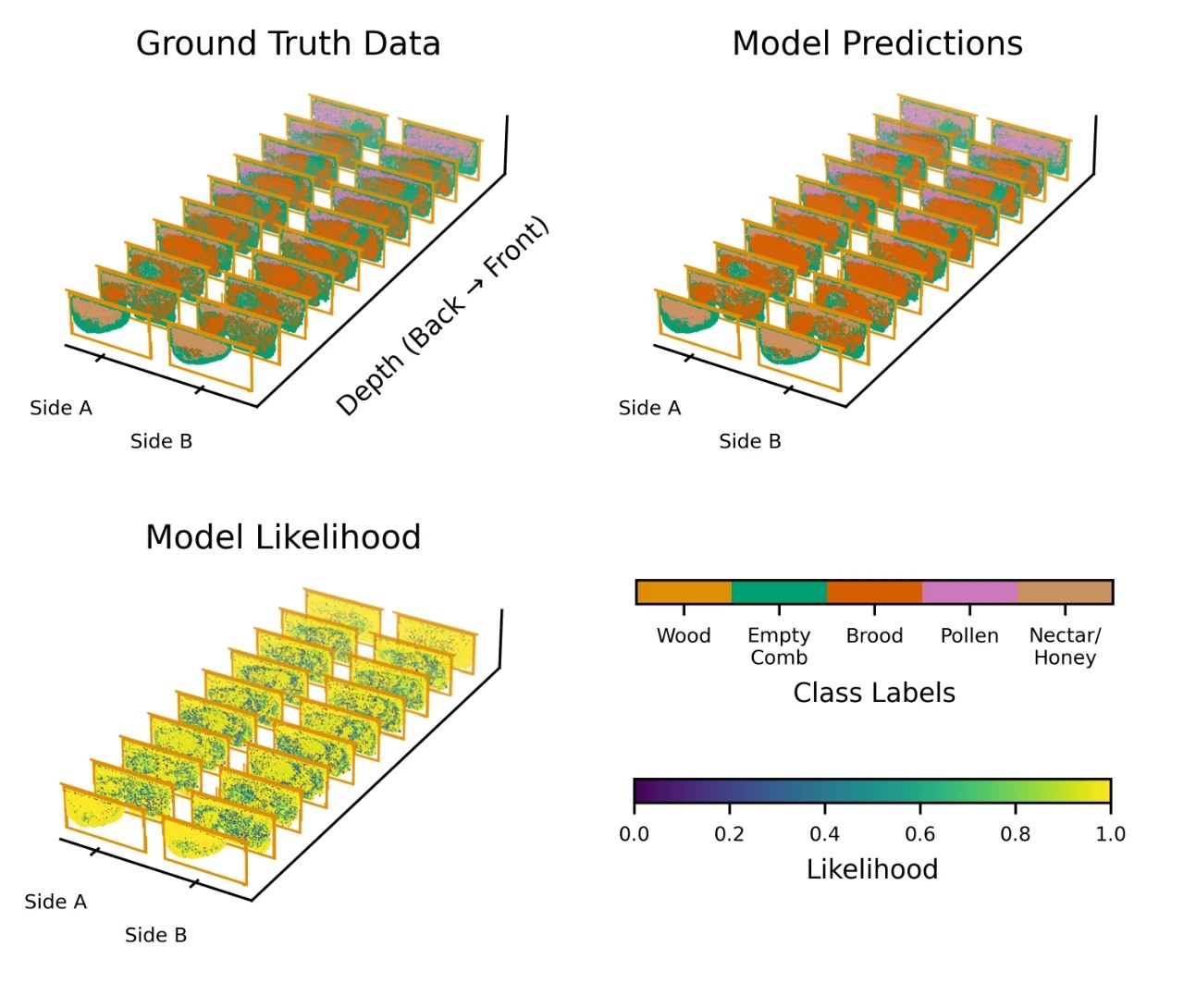
Modeling how brood and food stores are arranged across three-dimensional nests as colonies develop.
In collaboration with Michael Smith · Auburn University.
By playing, you allow YouTube (Google) to process data and use cookies. Privacy.
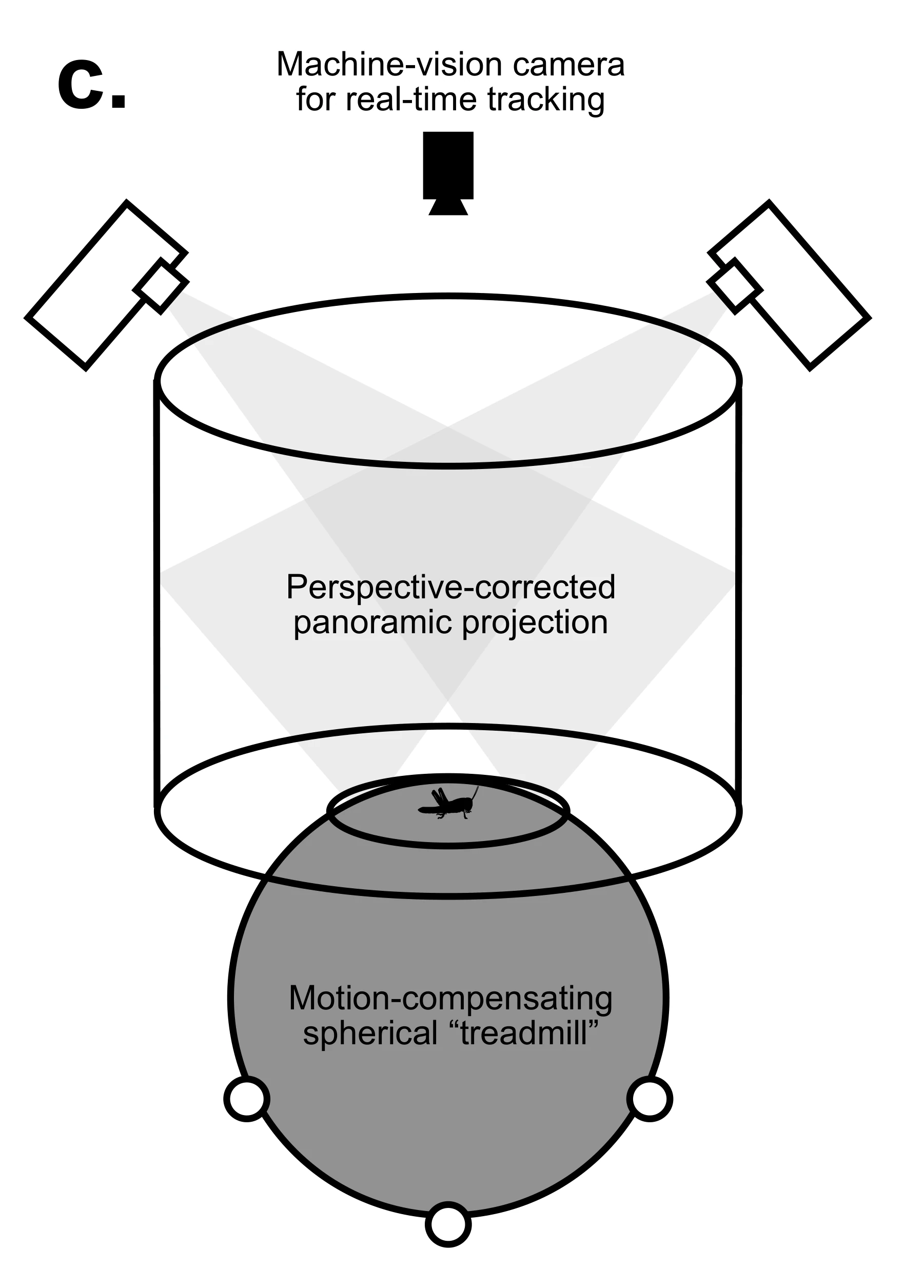
Testing how individual decisions give rise to collective motion in locusts.
This study revealed that locust swarming behavior emerges from internal decision-making processes rather than alignment with nearby individuals.
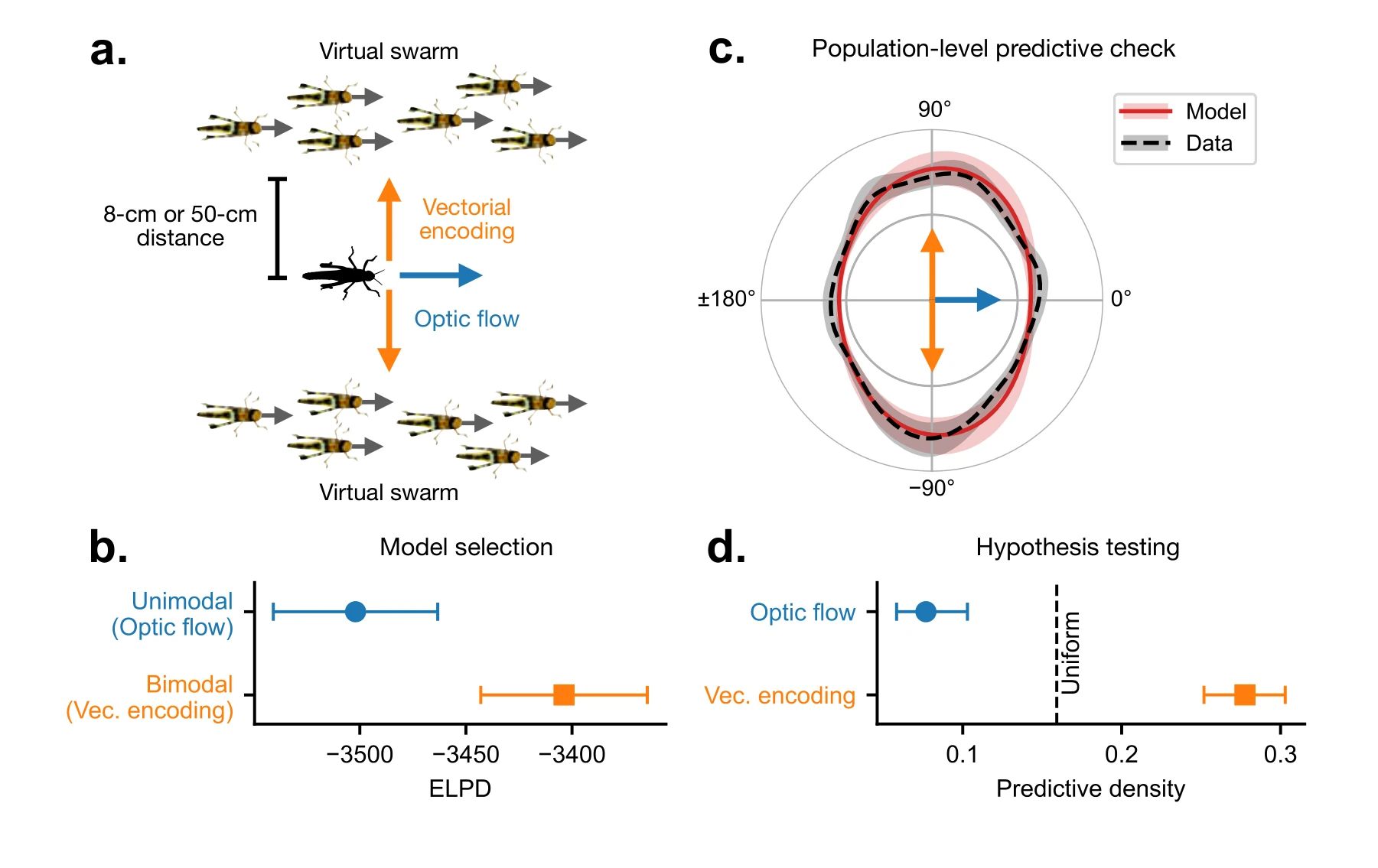 Expand figure
The virtual swarms distinguish two predictions: following visual motion, or choosing directions toward neighbors. The circular model compares these hypotheses against the locusts’ observed headings.
Graving et al., Unwrapping circular statistics with Bayesian multilevel models. Figures from the circular-statistics manuscript, using the same data as the Science study.I collaborated with colleagues to analyze behavioral data from controlled lab and immersive virtual reality experiments, developing a Bayesian model to test competing mechanistic hypotheses of collective motion. Our results challenged classical alignment-based theories, showing that group coordination emerges from individual decision-making informed by neural representations of neighboring locusts.
By playing, you allow YouTube (Google) to process data and use cookies. Privacy.
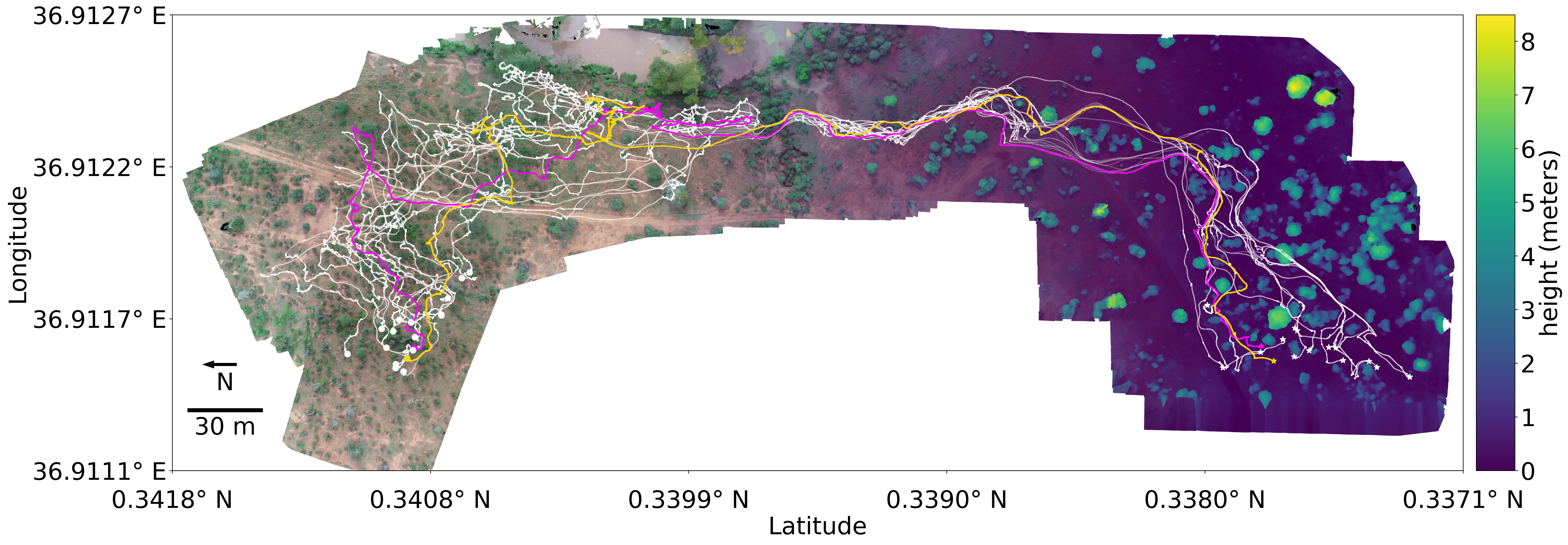
Reconstructing individual trajectories and environmental context with computer vision.
This work introduced a drone- and computer vision–based system for high-resolution tracking of animal groups in the wild.
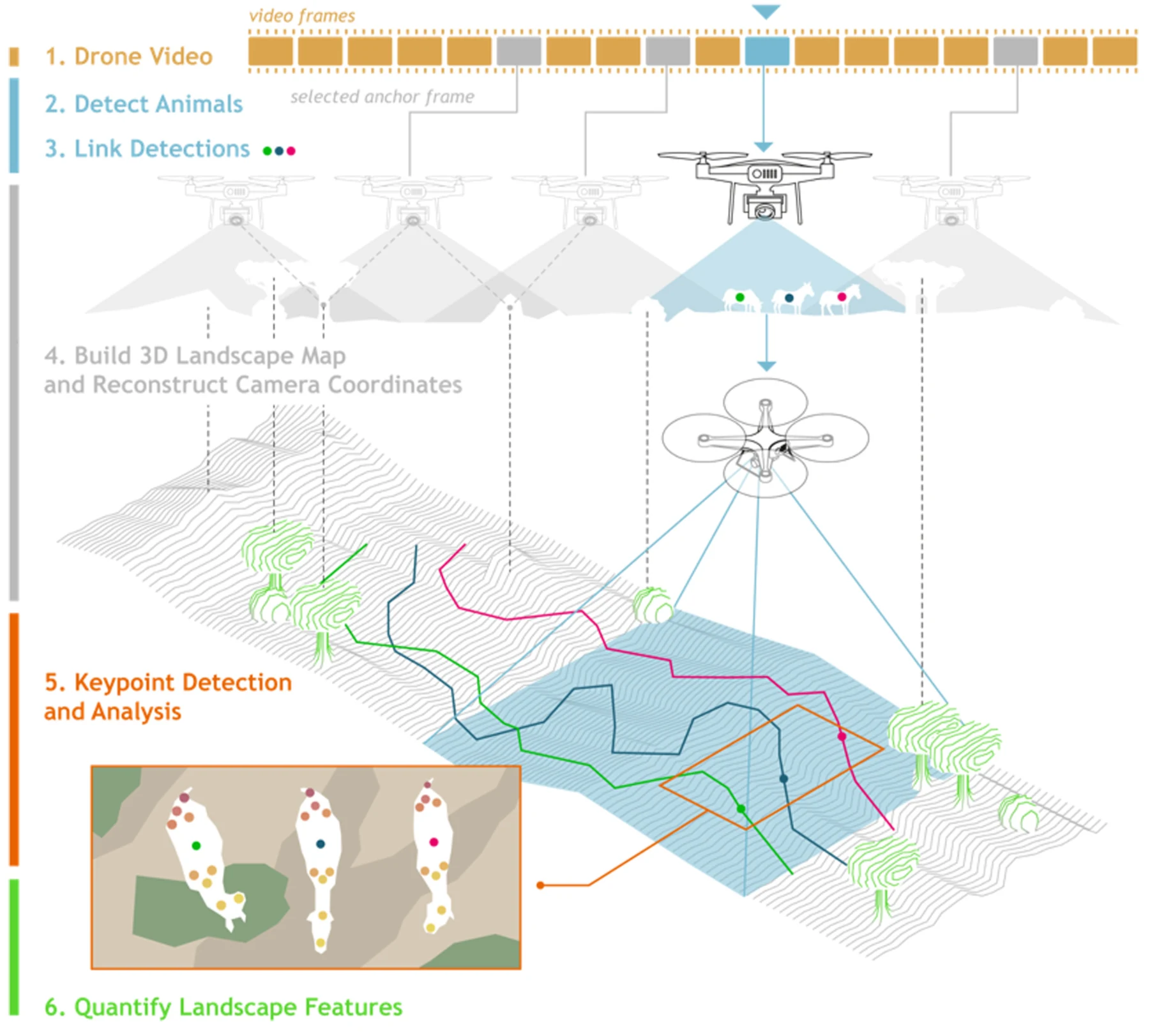 Expand figure
Animal tracks and a reconstructed 3D landscape are combined to place movement in geographical coordinates. This separates the animals’ motion from the drone’s motion.
Figure 1 · Koger et al., Journal of Animal Ecology (2023) · CC BY-NC. Cropped from the published figure.I helped build and refine a scalable pipeline that combines drone video with deep learning and computer vision algorithms to detect, track, and reconstruct 3D movement and environmental context for wild animals. Working with an interdisciplinary team, we enabled large-scale, non-invasive behavioral analysis in natural settings — advancing tools for behavioral ecology and conservation.
By playing, you allow YouTube (Google) to process data and use cookies. Privacy.
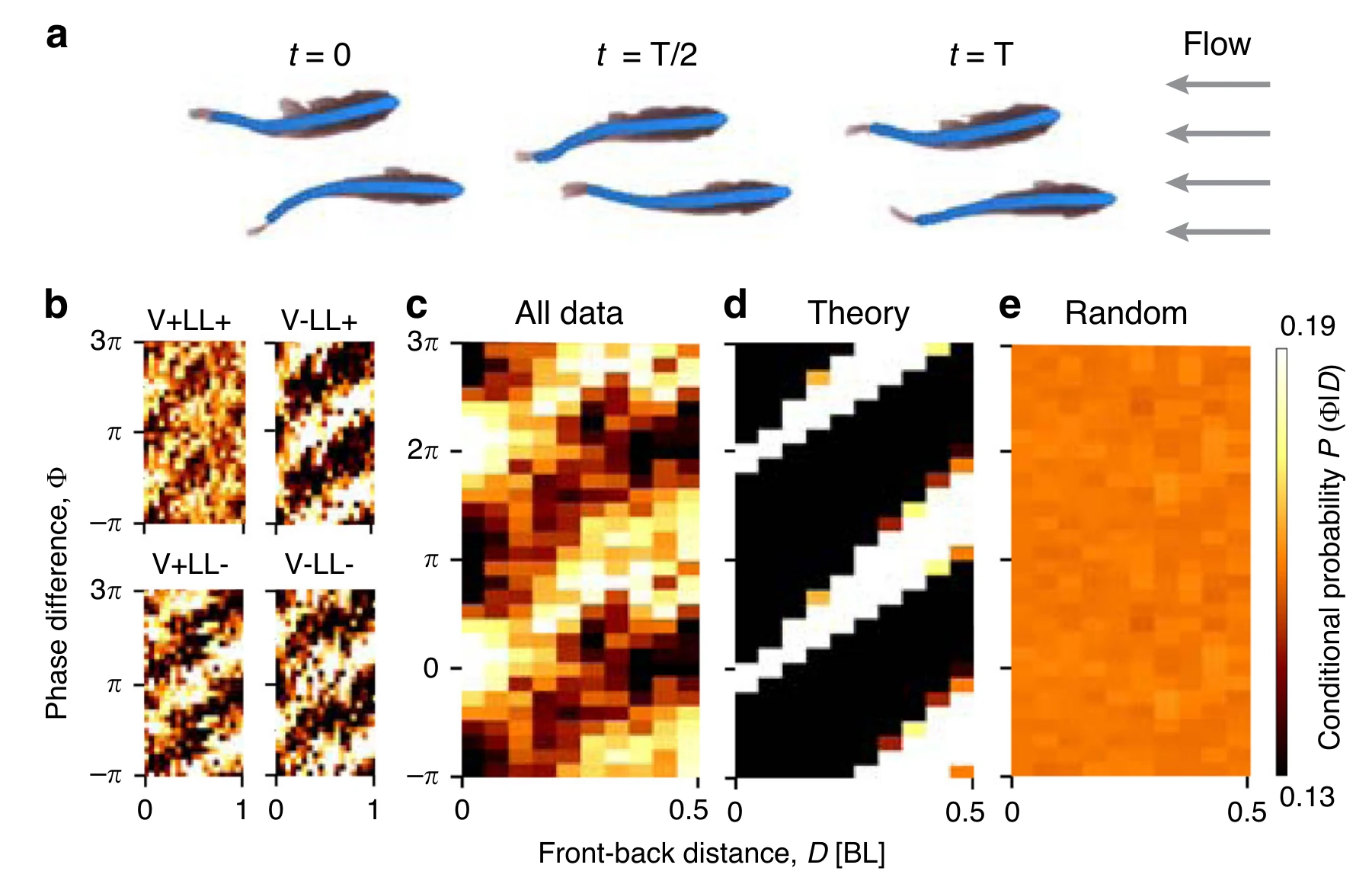
How fish coordinate their tailbeats to exploit the vortices produced by their neighbors.
This paper identified a schooling strategy where fish synchronize their tailbeats to exploit hydrodynamic advantages, matching behavior previously seen in bio-inspired robots.
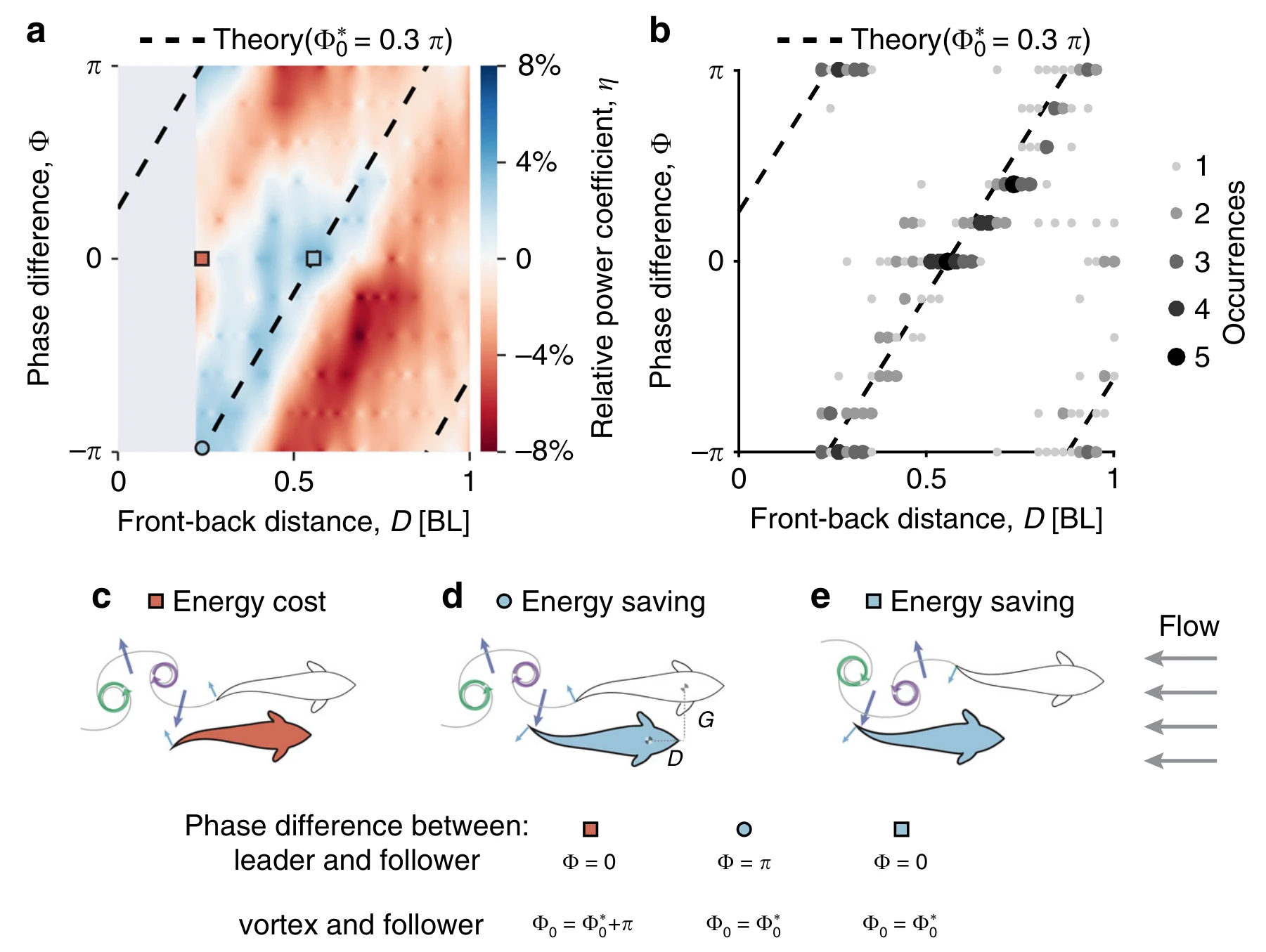 Expand figure
Robotic fish let us measure swimming power directly. The energetic benefit depends on both spacing and tailbeat timing: the follower can move with the flow induced by its neighbor’s vortices, or work against it.
Figure 2 · Li et al., Nature Communications (2020) · CC BY 4.0. Cropped from the published figure.I contributed to the analysis pipeline, applying deep learning–based pose estimation to track fish movement and test predictions from robotic models. The findings showed that real fish use similar vortex-phase matching strategies to gain energetic benefits during coordinated swimming.
Developing fast, accurate methods for measuring animal posture with deep learning.
DeepPoseKit introduced methods for fast, accurate animal pose estimation, combining multi-scale deep learning with efficient body-landmark localization.
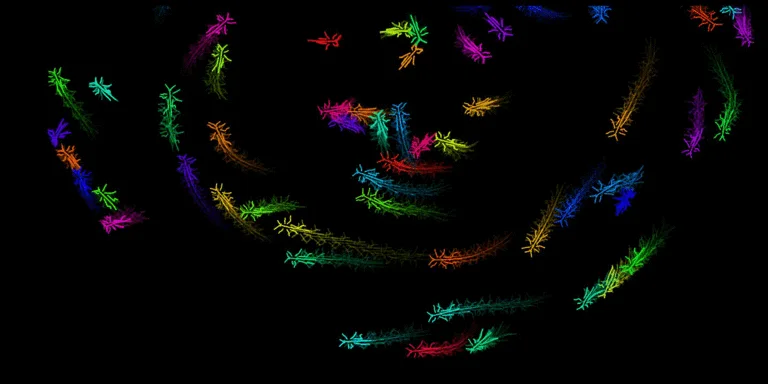
I led the development of DeepPoseKit’s methods, combining multi-scale deep learning, representations of the relationships between body landmarks, and fast landmark localization with subpixel precision. The work addressed the trade-off between speed and accuracy in measuring animal posture across species.
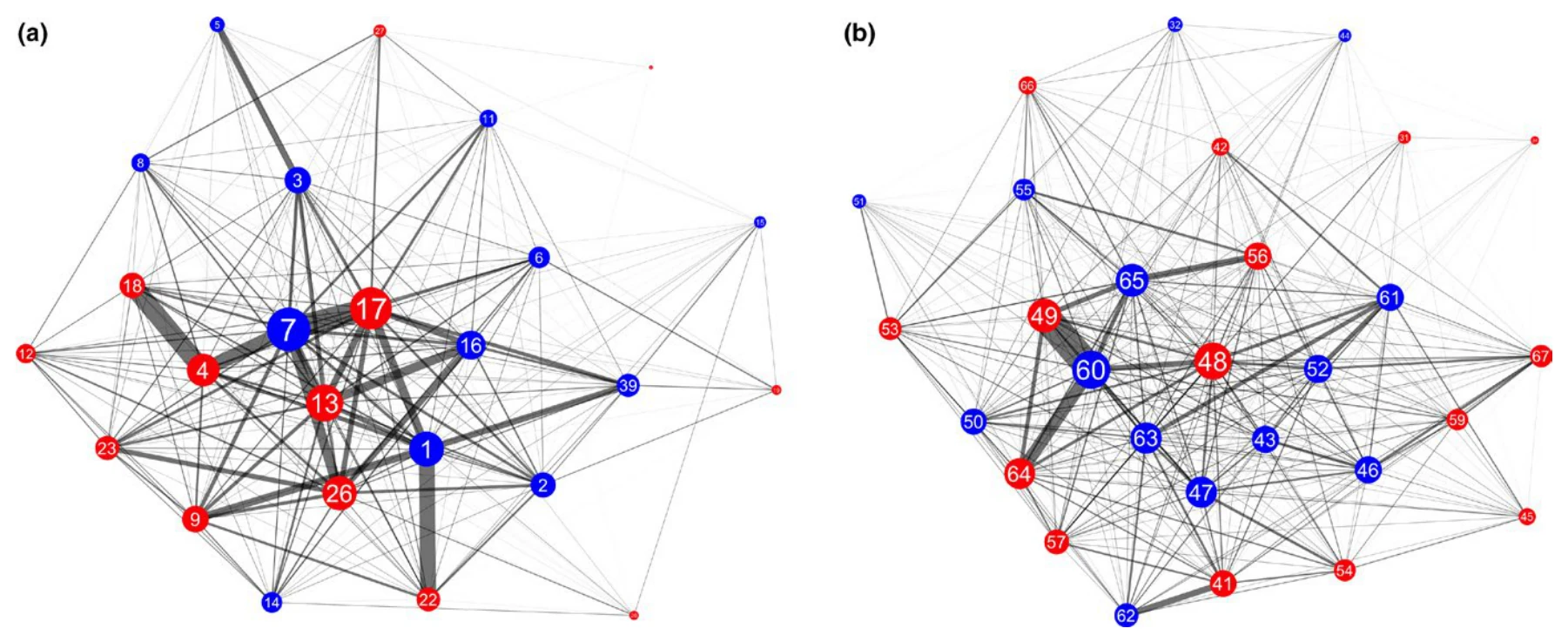
Using lightweight barcode backpacks and computer vision to map individual movements and social networks.
This system uses barcode-equipped backpacks to enable automated, individual-level tracking of birds for behavioral research.
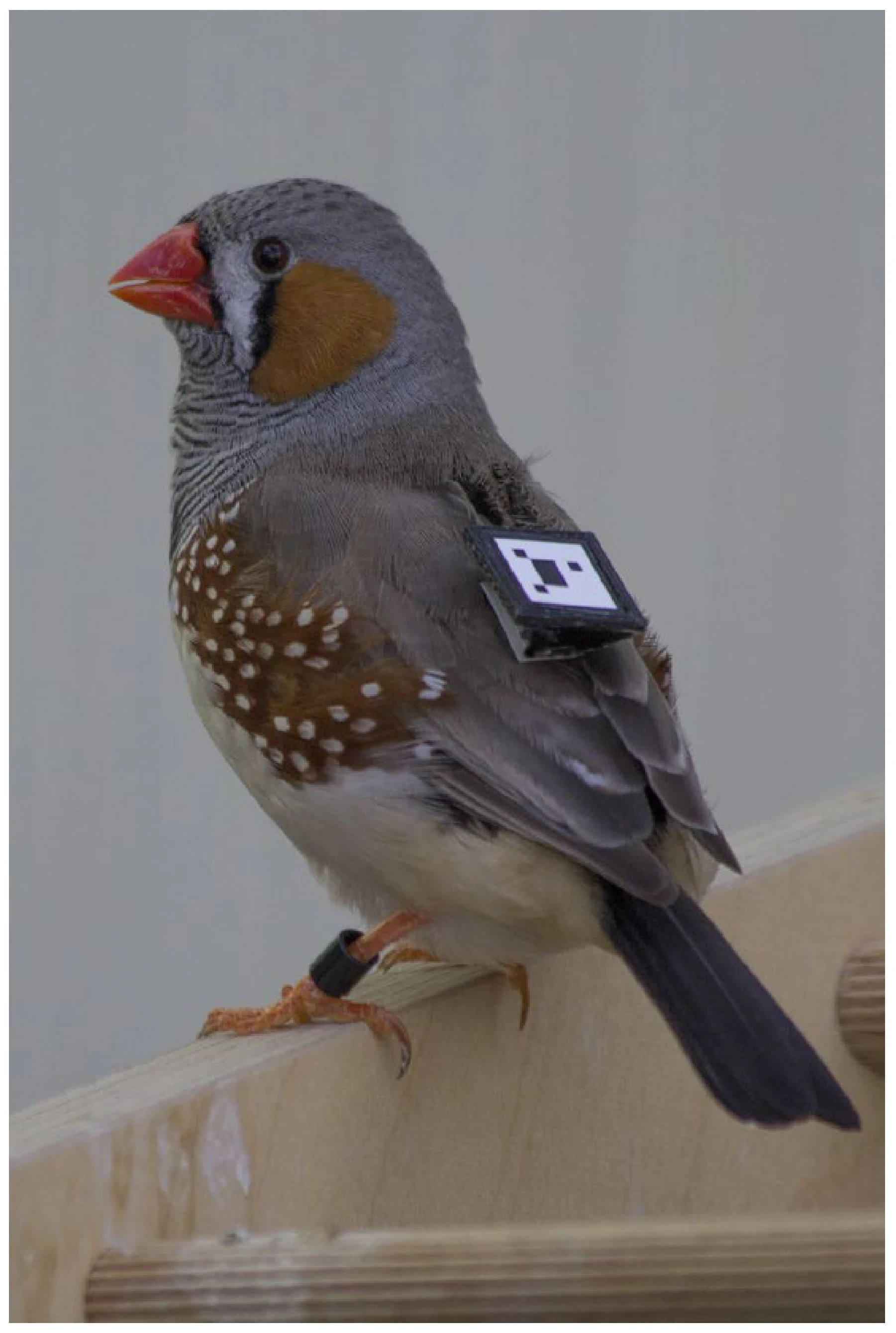 Expand figure
A male zebra finch wears its barcode backpack about four months after fitting. Camera images identify and locate the tags, allowing individuals to be tracked together in a group.
Figure 5 · Alarcón-Nieto et al., Methods in Ecology and Evolution (2018). Cropped from the published figure. © 2018 The Authors.As part of a collaborative project, I helped design and implement the computer vision pipeline used to detect and track barcoded zebra finches. The system provides continuous identity, position, and orientation data, supporting long-term studies of behavior and social networks at high resolution.
By playing, you allow YouTube (Google) to process data and use cookies. Privacy.
Exploring how whip spiders navigate using touch and smell.
Our studies revealed that whip spiders use tactile and olfactory cues — not vision — to navigate complex environments with impressive spatial precision.
I led experimental design and data collection across both lab and field settings, collaborating with colleagues to combine radio telemetry, behavioral tracking, and sensory manipulations. Together, we showed that antenniform legs provide essential multisensory input for goal-directed navigation in the absence of visual cues.